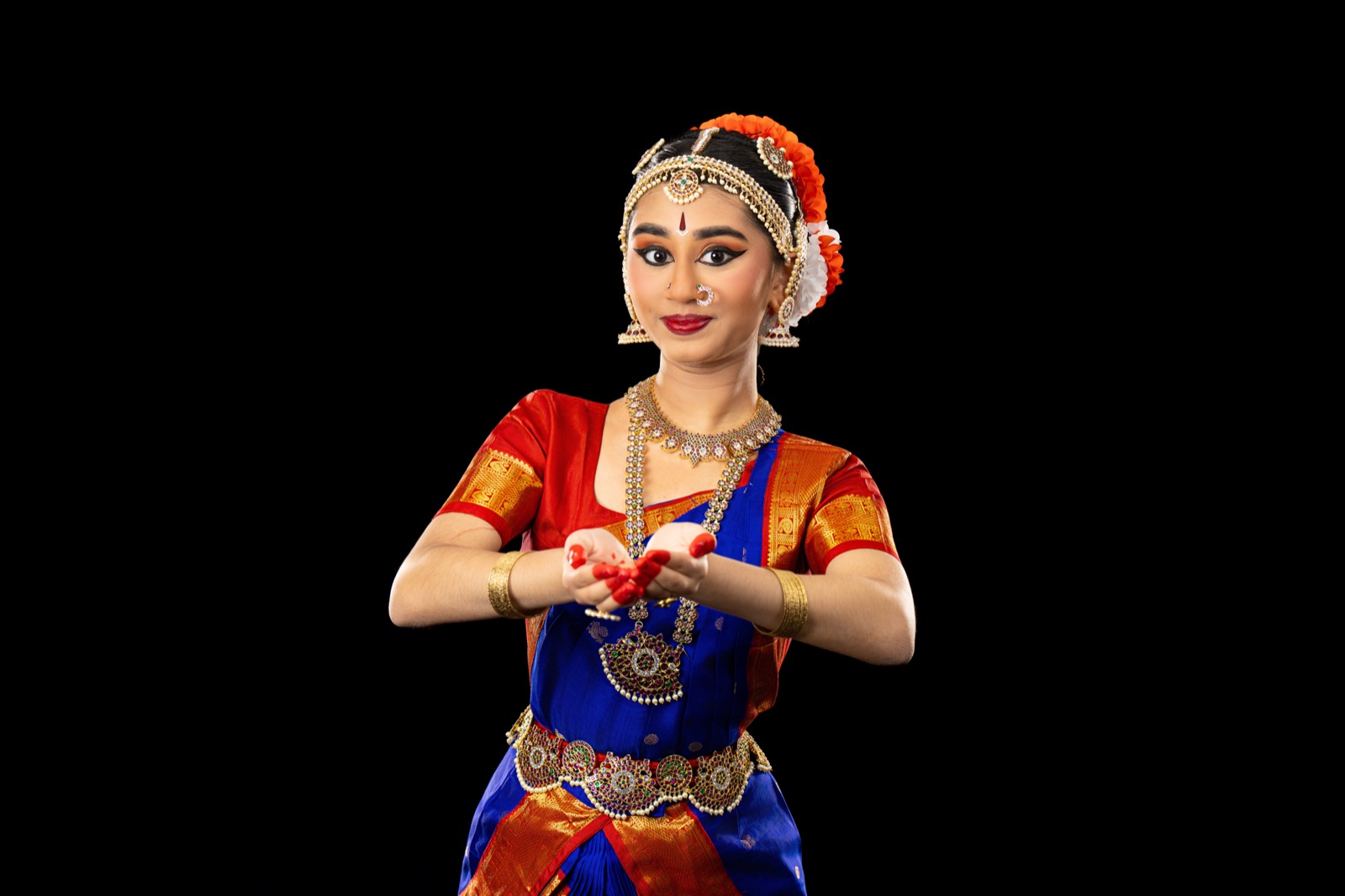
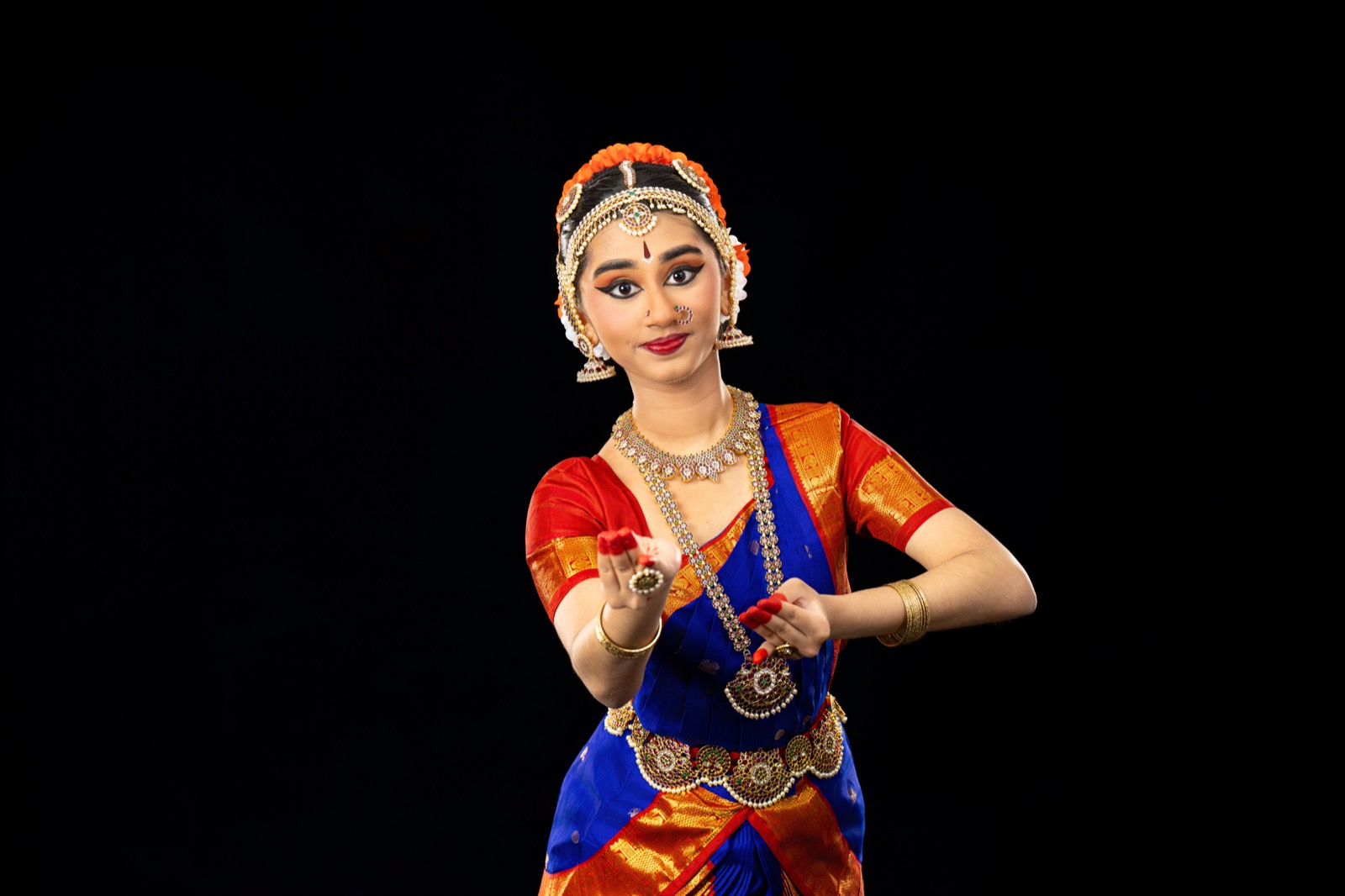
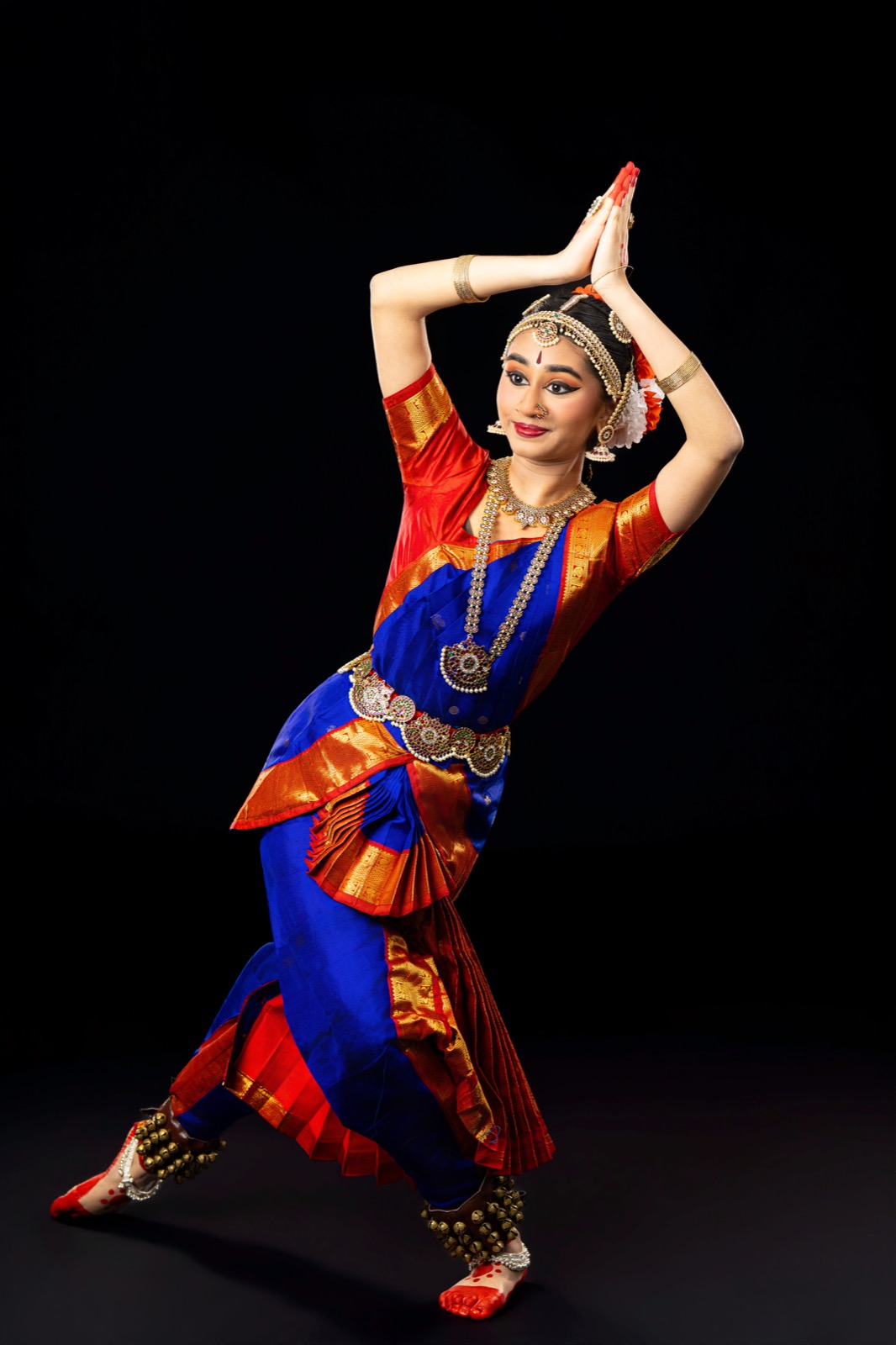
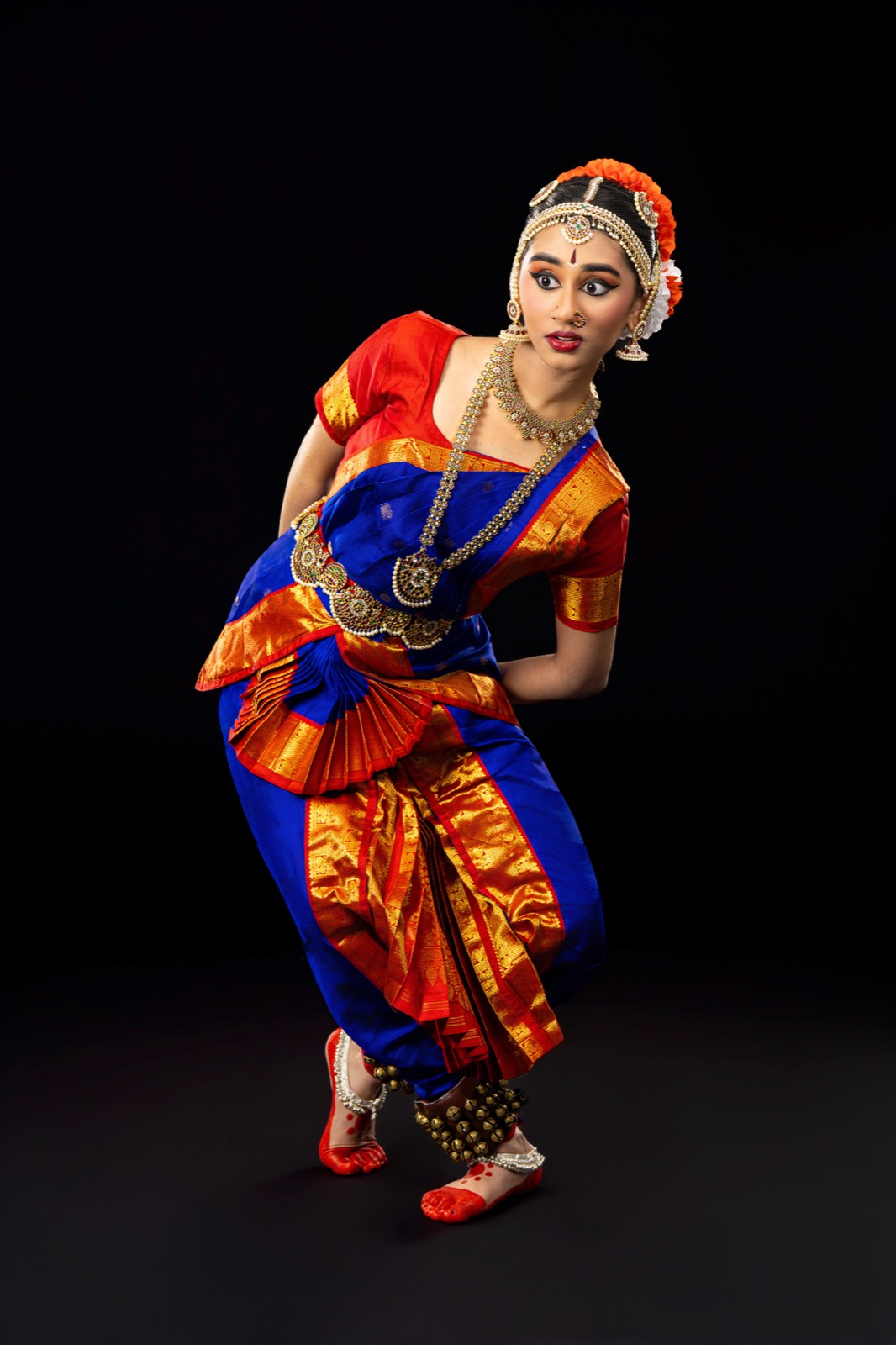
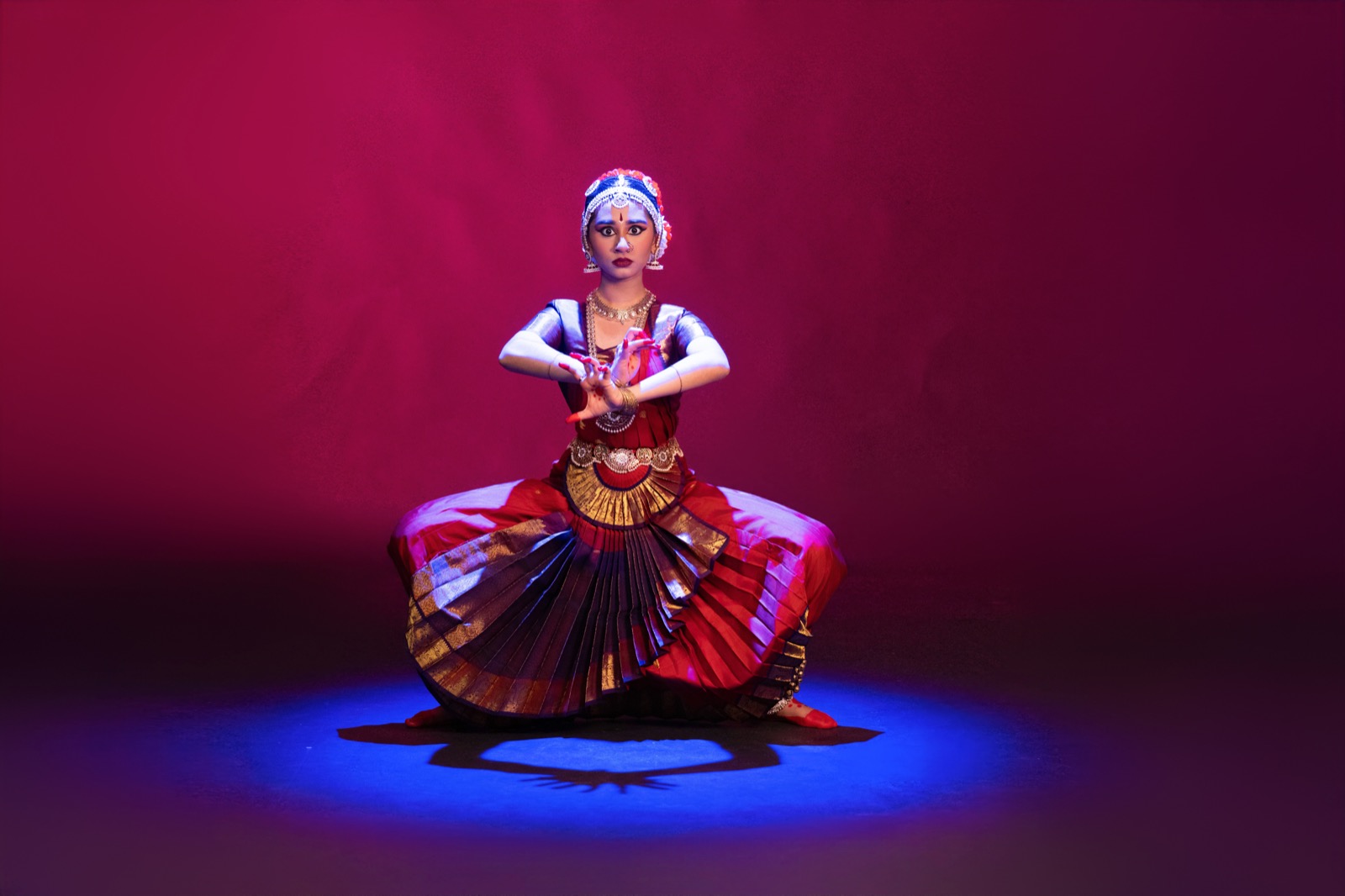
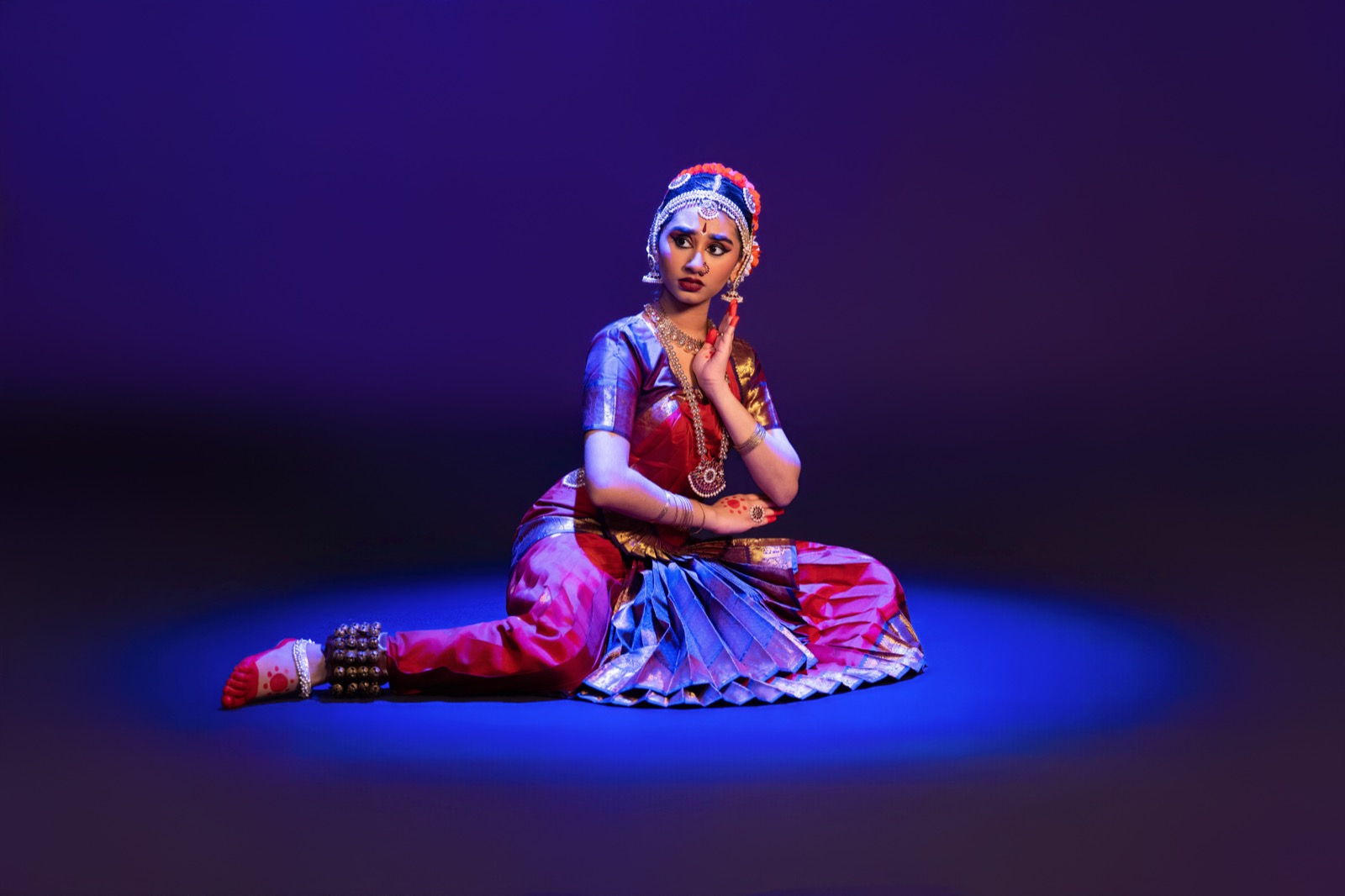
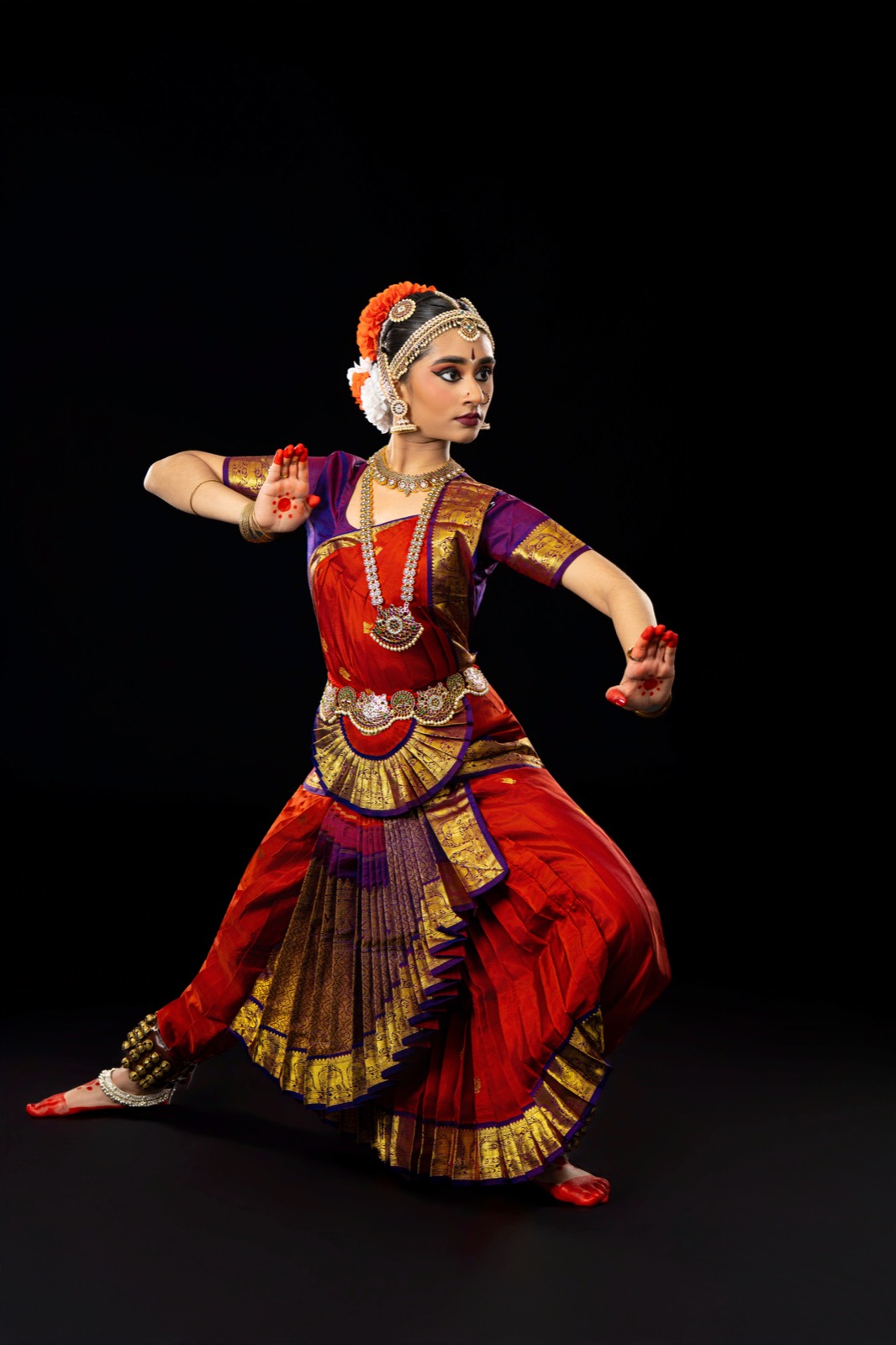
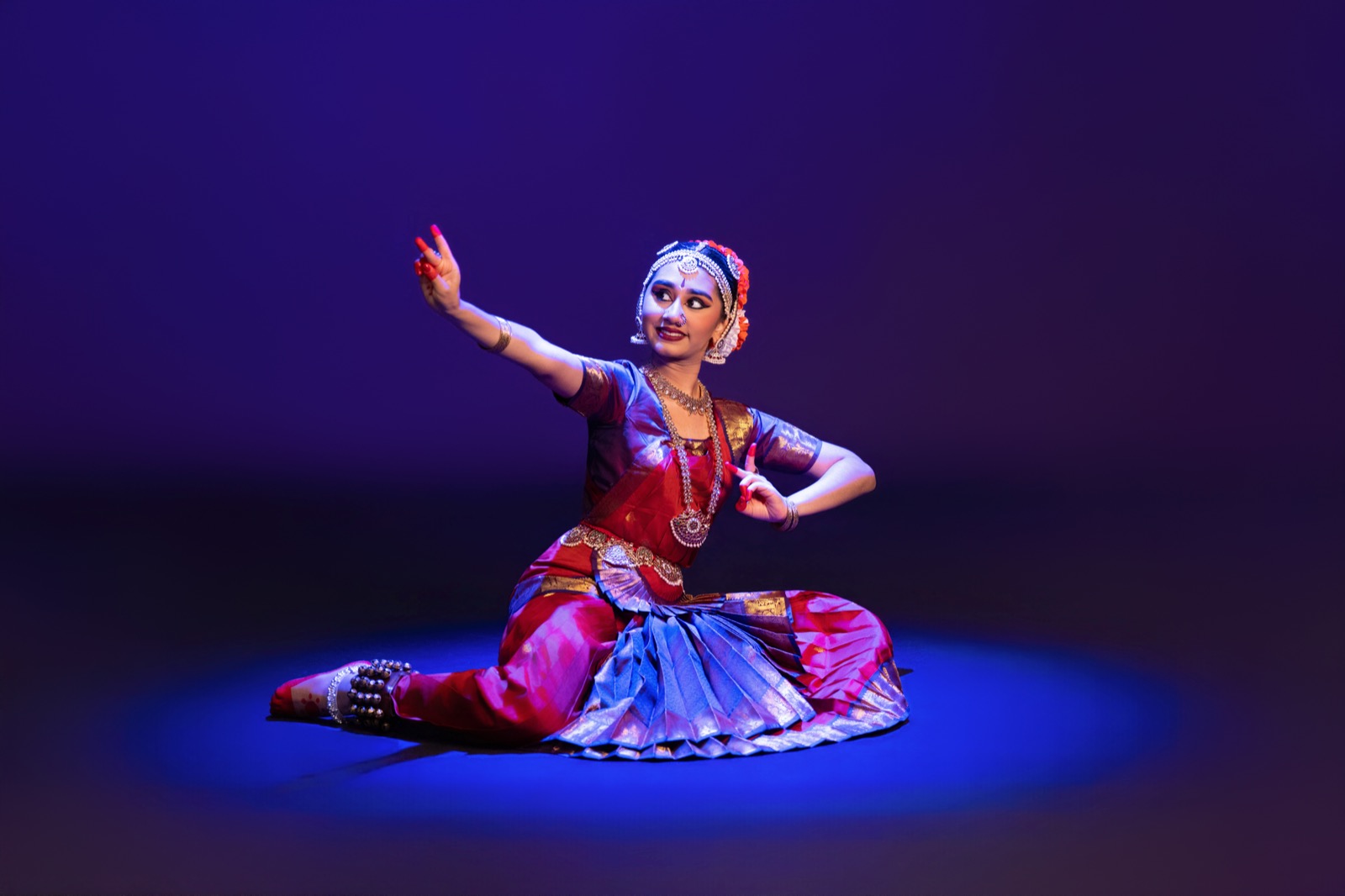
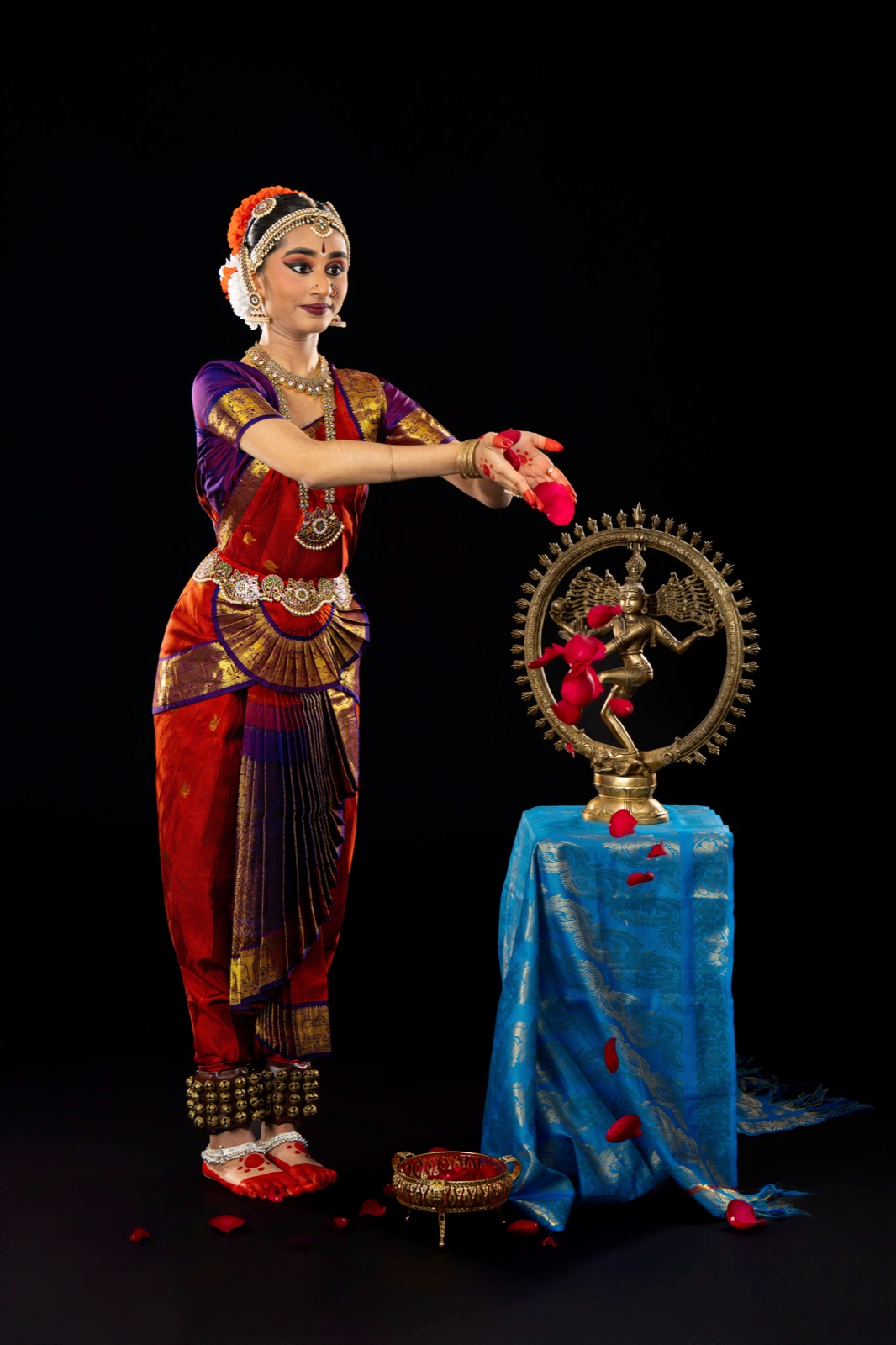
A traditional path through invocation, rhythm, expression, devotion, celebration, and blessing.
The Bharatanatyam recital follows a traditional sequence known as the Margam, meaning "path." Carefully structured over centuries, the Margam guides both dancer and audience through a complete artistic and spiritual journey. It begins with invocation and pure movement, gradually expands into expressive storytelling and devotion, reaches its artistic height in the Varnam, and concludes with rhythm, celebration, gratitude, and blessings.
Each composition in the Margam highlights a distinct dimension of Bharatanatyam. Some pieces emphasize geometry, balance, rhythm, and stamina; others reveal the emotional richness of abhinaya, the art of expression. Together, they require the dancer to demonstrate technical precision, musical sensitivity, expressive depth, spiritual awareness, and artistic maturity. Ahana's Arangetram repertoire reflects this timeless tradition while also showcasing the unique choreographic vision of her guru, Smt. Padmaja Kelam.
01
Pushpanjali & Ganesha Sthuthi
Raga
Nattai
Tala
Adi
Composer
Guru K.P. Rajaratnam Pillai
Choreography
Guru Smt. Padmaja Kelam
The Pushpanjali traditionally opens a Bharatanatyam recital with a symbolic offering of flowers, serving as a deep act of reverence and gratitude. Through this sacred gesture, Ahana offers her heartfelt salutations to the divine, her guru, the orchestra, and the audience, acknowledging all who make her artistic journey possible.
This opening piece seamlessly transitions into the Ganesha Sthuthi, a prayer dedicated to Lord Ganesha, the remover of obstacles. By invoking his presence at the very start of her Arangetram, Ahana seeks wisdom, clarity, and divine blessings for a graceful and successful performance.
02
Sarasvati Vandana
Raga
Kalyani
Tala
Roopakam
Composer
Veenai Kuppayyar
Choreography
Guru Smt. Padmaja Kelam
The Sarasvati Vandana is a prayer of praise that highlights Bharatanatyam as an expression of pure devotion and discipline. Following the invocation to Lord Ganesha, this piece honors Goddess Sarasvati, the divine source of wisdom, music, and learning.
Traditionally depicted with scriptures and a veena, she represents clarity, refinement, and the ultimate pursuit of knowledge. Because an Arangetram represents years of rigorous practice and personal dedication, invoking the goddess of the arts holds deep significance for this milestone event.
Through this performance, Ahana expresses her reverence as a devoted worshipper, seeking Goddess Sarasvati's divine blessings to guide her continued growth and artistic journey.
03
Alarippu
Raga
Ragamalika
Tala
Thalamalika (Multiple Talas)
Composer
Traditional
Choreography
Guru Smt. Padmaja Kelam
The Alarippu is the first pure dance piece of the Bharatanatyam Margam, serving as the dancer's formal entry into the physical and rhythmic structure of the recital. Meaning "to blossom," it symbolizes the gradual unfolding of a flower as the dancer's body, mind, and energy awaken.
Unlike narrative compositions, the Alarippu does not focus on storytelling. Instead, this item highlights the architectural beauty of Bharatanatyam through precise lines, perfect symmetry, and absolute coordination.
The movements begin with controlled simplicity and expand into a display of discipline and balance. In this Thalamalika Alarippu, Ahana demonstrates rhythmic control by transitioning seamlessly through three speeds across multiple talas, preparing her for the demanding performance ahead.
04
Shabdam
Raga
Kambhoji
Tala
Misra Chapu
Composer
Ponniah Pillai
Choreography
Guru Smt. Padmaja Kelam
The Shabdam marks a crucial transition in the Bharatanatyam Margam, introducing expressive storytelling through abhinaya after the abstract, rhythmic focus of previous pieces. Poetry, melody, and dramatic gesture unite here to bring specific characters, moods, and deep emotions to life for the first time in the recital.
This item acts as a bridge, blending lyrical content with measured rhythm to highlight the dancer's expressive charm, emotional intelligence, and dramatic discipline.
In the composition Sarasijakshulu, Ahana portrays the playful and mischievous antics of Lord Krishna. She utilizes the rich poetic tradition of Nindastuti, lovingly reproaching the divine while simultaneously praising them. As she playfully chides Krishna for his tricks, she celebrates his irresistible grace, creating a performance filled with charm and devotion.
05
Varnam
Raga
Ranjani
Tala
Adi
Composer
Madurai R. Muralidaran
Choreography
Guru Smt. Padmaja Kelam
The Varnam is the definitive artistic and technical centerpiece of the Bharatanatyam Margam, widely regarded as the most demanding composition in the entire recital. It requires the dancer to sustain exceptional energy, precision, and emotional depth over an extended period.
This complex piece beautifully unites nritta, pure rhythmic dance, and nritya, expressive narrative dance. The dancer must transition fluidly between intricate rhythmic passages, sculptural poses, complex footwork, and intense storytelling. Ultimately, it tests physical stamina, artistic maturity, and command over the art form.
In the composition Simhavahini, Ahana portrays the divine power and compassion of Goddess Durga through her nine sacred forms, the Navadurga. Through vibrant rhythm and expressive abhinaya, she brings to life each unique manifestation, capturing the goddess's courage, protective strength, wisdom, and boundless divine grace.
06
Javali
Raga
Makhari
Tala
Adi
Composer
Narayana Teertha
Choreography
Guru Smt. Padmaja Kelam
The Javali brings a distinctly different emotional texture to the Bharatanatyam Margam, shifting away from the grandeur of the Varnam toward intimate human experiences. Grounded in subtle, nuanced abhinaya, it allows the dancer to portray deeply personal reflections of longing, vulnerability, and transformation.
Because this piece depends heavily on raw expression rather than grand movements, it requires emotional sensitivity and artistic restraint. Minute changes in the eyes, facial expression, and posture reveal the inner life of the character, demonstrating the art form's profound capability to mirror complex emotional worlds.
In the piece Idene Sakhi, Ahana portrays a heroine confiding in her close friend about her beloved. She beautifully captures a spectrum of admiration, deep longing, and sorrow. The piece concludes with a unique and creative interpretation, where the heroine finds the inner strength to free herself from lingering attachments and confidently embrace her own independence.
07
Kirthanam
Raga
Darbari Kanada
Tala
Adi
Composer
Purandara Dasa
Choreography
Guru Smt. Padmaja Kelam
The Keerthanam is a sacred devotional composition deeply rooted in the spirit of bhakti, celebrating the glory and divine attributes of the almighty through a seamless blend of music, rhythm, and dance.
Within the Bharatanatyam Margam, this item offers a profound moment of spiritual focus, allowing the dancer to express reverence, complete surrender, and inner devotion. Rather than merely describing the deity, the dancer draws from rich poetic imagery to embody the emotion of devotion and bring sacred symbolism to life.
In the composition Chandrachooda Shiva Shankara, Ahana portrays the divine grace and supreme compassion of Lord Shiva. Through expressive abhinaya, she vividly depicts the sacred River Ganga descending from heaven and flowing safely through Shiva's matted locks, beautifully symbolizing his eternal role as the ultimate protector and benefactor of humanity.
08
Thillana
Raga
Valachi
Tala
Adi
Composer
Dwaraki Krishnaswamy
Choreography
Guru Smt. Padmaja Kelam
The Thillana is the vibrant and exhilarating finale of the Bharatanatyam Margam, celebrated for its lively rhythm, intricate footwork, and joyous energy. Traditionally emphasizing pure dance, nritta, it showcases the dancer's absolute command over speed, precision, balance, and rhythmic clarity after the recital's expansive expressive pieces.
As the concluding major milestone of the evening, its brisk tempo and dynamic choreography build to a triumphant peak, radiating technical confidence and the sheer joy of movement.
In this unique Valachi Thillana, Ahana masterfully combines sharp rhythmic precision with expressive storytelling to depict the epic battle between Goddess Durga and the buffalo demon, Mahishasura. The performance reaches a powerful culmination as it portrays Durga's ultimate triumph over evil, celebrating the eternal victory of courage, righteousness, and divine power on stage.
09
Mangalam
Raga
Madhyamavati
Tala
Adi
Composer
Purandara Dasa
Choreography
Guru Smt. Padmaja Kelam
The Mangalam is the traditional concluding piece of a Bharatanatyam recital, offering final prayers of gratitude and auspicious blessings. Just as the performance begins with a sacred invocation, it ends with a peaceful benediction, beautifully completing the spiritual and artistic cycle of the Margam.
It serves as a final expression of heartfelt thanks to the divine, the guru, the musicians, and the supportive audience. After the intense technical demands of the Varnam and the brilliant speed of the Thillana, this serene piece restores stillness and quiet grace to the stage.
In Mukutakke Mangala, Ahana offers her closing prayers to the Dashavatara, the ten divine incarnations of Lord Vishnu. She then concludes the evening with a universal prayer to Lord Purandara Vittala, bringing her monumental Arangetram journey to a deeply graceful, blessed, and auspicious conclusion.
Closing Reflection
The Journey Continues
An Arangetram marks not the end of a dancer's learning, but the beginning of a lifelong artistic journey. It is a moment of gratitude: to the guru who has guided the student, to the family and community who have supported the journey, to the musicians who bring the compositions to life, and to the tradition that has been lovingly preserved across generations.
With the blessings of her gurus, family, musicians, and well-wishers, Ahana looks forward to continuing her pursuit of Bharatanatyam and carrying forward the beauty, discipline, and devotion of this rich classical art form.